Climate change is no longer a distant or abstract issue for the United States. Its effects are already reshaping the nation’s coastlines and agricultural heartland, influencing where people live, how food is grown, and how communities plan for the future. Rising temperatures, shifting weather patterns, and extreme climate events are creating long-term challenges that touch both environmental and economic stability.
Understanding how climate change is affecting America’s coasts and crops helps explain why it has become one of the most pressing issues facing policymakers, farmers, and coastal communities today.
Rising Sea Levels and America’s Coastlines
One of the clearest impacts of climate change is sea level rise. As global temperatures increase, polar ice melts and warmer ocean water expands, slowly raising sea levels along U.S. coastlines. This process threatens low-lying areas, barrier islands, and densely populated coastal cities.
Regions along the Atlantic Coast, Gulf of Mexico, and parts of the Pacific Coast are already experiencing more frequent tidal flooding, even on sunny days. Roads, drainage systems, and homes are increasingly vulnerable, forcing costly infrastructure upgrades and, in some cases, relocation.
Stronger Storms and Coastal Erosion
Climate change is contributing to more intense hurricanes and storms, especially in the Atlantic and Gulf regions. Warmer ocean temperatures provide additional energy to storms, increasing rainfall, wind intensity, and storm surge damage.
This leads to accelerated coastal erosion, washing away beaches, wetlands, and natural buffers that once protected communities from storms. As these natural defenses weaken, coastlines become even more exposed to future climate extremes.
Saltwater Intrusion and Freshwater Threats
Rising seas do more than flood coastal land they also push saltwater into freshwater systems. This process, known as saltwater intrusion, contaminates drinking supplies and agricultural soil in coastal farming areas.
In states like Florida, Louisiana, and parts of California, salt intrusion threatens both municipal water sources and farmland, making adaptation increasingly complex and expensive.
Changing Weather Patterns and U.S. Agriculture
America’s agricultural system depends heavily on predictable weather. Climate change is disrupting those patterns, leading to longer heatwaves, shifting rainfall, and more frequent droughts and floods.
Farmers are facing growing uncertainty around planting seasons, irrigation needs, and crop yields. These changes affect not only individual farms, but also national food supply chains and global export markets.
Heat Stress on Crops and Livestock
Rising temperatures place crops and livestock under increased stress. Heat reduces crop growth, interferes with pollination, and lowers yields for key commodities like corn, wheat, and soybeans.
Livestock are also affected. Extended heatwaves reduce animal productivity, increase water demand, and raise the risk of heat-related illness. These stresses drive up production costs and can influence food prices nationwide.
Droughts, Floods, and Crop Losses
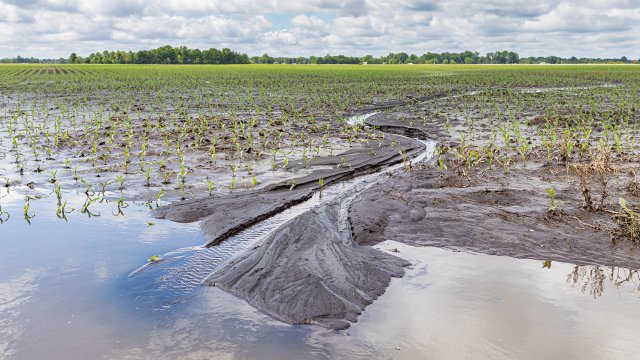
Climate change is increasing the frequency of extreme rainfall events and prolonged droughts. Too little rain dries out soil and depletes reservoirs, while too much rain floods fields, destroys crops, and delays planting.
Regions such as the Midwest, Great Plains, and California’s Central Valley are seeing more volatile growing seasons. This volatility raises insurance claims, increases federal support costs, and adds instability to the agricultural economy.
Shifting Growing Regions and Crop Choices
As temperatures rise, some crops are becoming less viable in traditional regions while opening opportunities in others. Farmers are adjusting by planting heat-resistant varieties, changing crop rotations, or moving production northward.
These shifts require new infrastructure, research investment, and long-term planning. They also affect rural economies built around specific crops and regional farming traditions.
Economic and Food Security Implications
The combined impact on coasts and crops has serious economic consequences. Coastal damage affects tourism, fishing, real estate, and insurance markets. Agricultural disruptions influence food prices, export competitiveness, and rural employment.
As climate pressures increase, governments face rising costs for disaster recovery, coastal protection, and farm support programs. These expenses shape future budgeting and long-term economic planning.
Adaptation Efforts Along the Coasts
Coastal communities are responding through a mix of engineering solutions and natural restoration. Seawalls, improved drainage systems, elevated structures, and wetland restoration are increasingly common.
Some areas are also exploring “managed retreat” relocating development away from high-risk coastlines to reduce long-term losses. These decisions involve difficult trade-offs between economic value and safety.
How Farmers Are Adapting to Climate Change
Farmers are adopting new technologies and strategies to stay productive. These include precision irrigation, climate-resilient crop varieties, soil conservation techniques, and improved forecasting tools.
While adaptation can reduce risk, it often requires significant investment, access to credit, and technical support factors that vary widely across regions and farm sizes.
Why Climate Impacts Are Accelerating
Climate impacts are accelerating because multiple factors are converging at once: higher global temperatures, increased weather extremes, and continued development in vulnerable areas.
The interaction between coastal exposure and agricultural stress makes climate change a nationwide concern—not limited to a single region or industry.
Conclusion
Climate change is reshaping America’s coasts and crops in ways that are already visible and steadily intensifying. Rising seas, stronger storms, and saltwater intrusion threaten coastal communities, while heat, drought, and extreme weather challenge farmers and food systems across the country.
How the United States responds through adaptation, infrastructure investment, and long-term planning will determine not only environmental outcomes, but economic resilience and food security for decades to come.