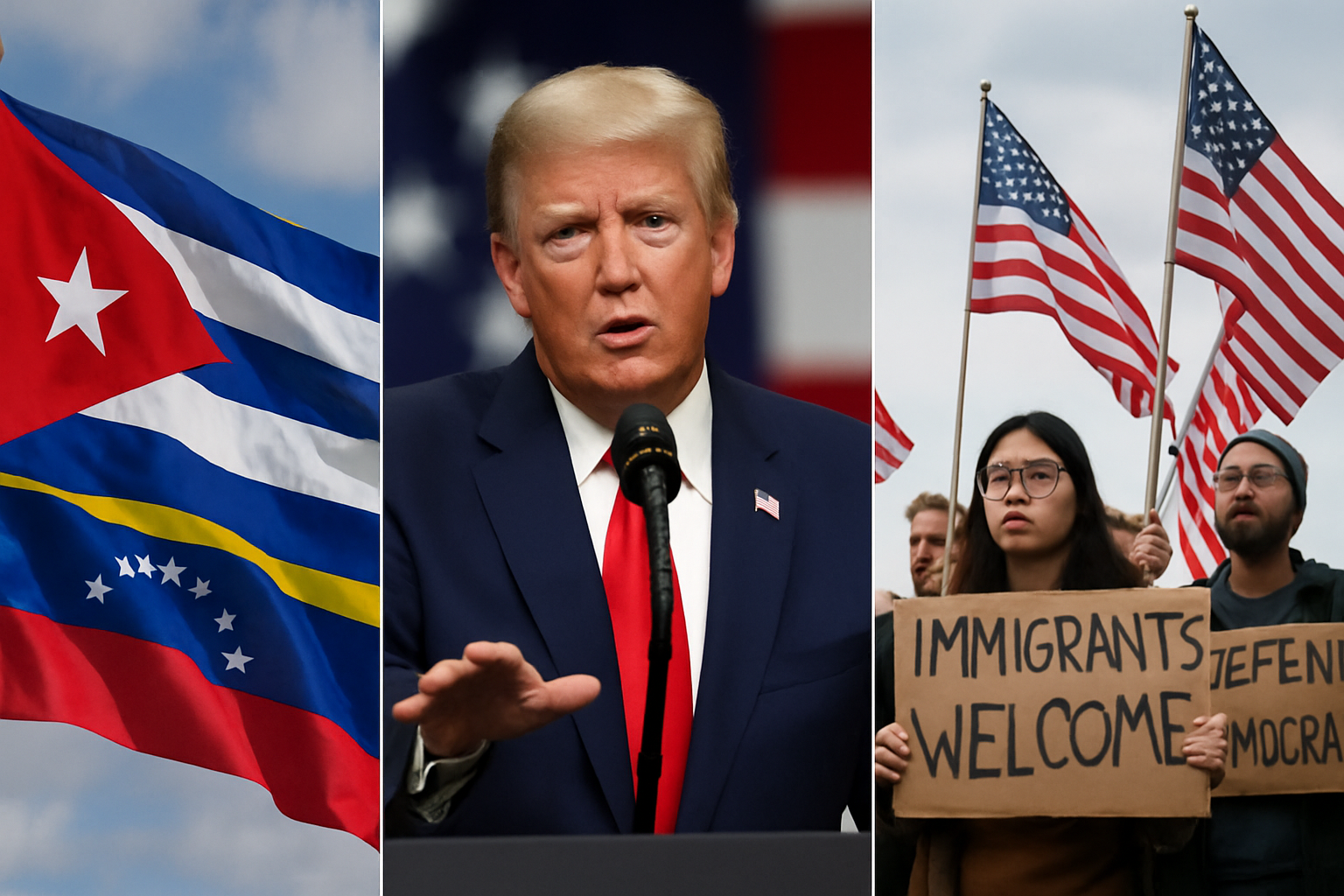
WASHINGTON — The United States is facing mounting international and domestic tensions as a series of recent policy decisions spark backlash from foreign governments, U.S. state leaders, and political opponents. From escalating disputes in Latin America to sharp disagreements at home over artificial intelligence, immigration, and national security, Washington finds itself at the center of widening controversy.
Analysts warn that these conflicts both abroad and domestically highlight deepening divisions over the direction of U.S. governance and global leadership.
Global Backlash Over U.S. Actions
Latin America Pushback After Oil Tanker Seizure
International tensions intensified after the U.S. seizure of an oil tanker linked to Venezuela, a move condemned by Cuba and other regional allies of Caracas. Cuban officials labeled the action “maritime aggression,” accusing Washington of using economic pressure to assert dominance in the region.
Venezuela’s government echoed the criticism, warning that such actions could destabilize already fragile diplomatic relations in Latin America.
U.S. officials defended the move as a lawful enforcement of sanctions, arguing it was necessary to counter illegal oil exports and financial support for sanctioned regimes.
Middle East Strains After Deadly Syria Attack
Tensions have also risen in the Middle East following the killing of U.S. personnel in Syria, an attack attributed to ISIS-linked militants. American officials vowed retaliation, signaling a possible escalation in U.S. military operations.
The incident has reignited debate over:
-
The continued U.S. military presence in Syria
-
Counterterrorism strategy
-
Risks to American personnel abroad
Domestic Tensions Within the United States
Clashes Over AI Regulation
At home, political tensions escalated after former President Donald Trump threatened to withhold federal broadband funding from states that adopt strict artificial intelligence regulations.
Democratic governors particularly in California accused the administration of:
-
Undermining states’ rights
-
Politicizing infrastructure funding
-
Favoring tech industry interests over consumer protections
Supporters argue a single national AI framework is needed to maintain U.S. competitiveness against China.
Immigration Policy Disputes
Federal immigration enforcement remains another flashpoint. Protests erupted in multiple states after reports of expanded information-sharing between federal agencies and immigration authorities.
Critics say these measures:
-
Violate privacy protections
-
Target immigrant communities unfairly
-
Conflict with state and local policies
Federal officials counter that stricter enforcement is essential for national security and border control.
Healthcare and Budget Battles
Meanwhile, healthcare policy has added to domestic unrest. House Republicans’ healthcare proposal excluding permanent extensions of ACA subsidies has triggered intense debate over affordability and coverage.
Democrats warn millions could lose insurance or face rising premiums, while Republicans emphasize deficit control and market-based reforms.
Political Fallout and Public Reaction
The combined effect of these controversies has deepened partisan divides:
-
Democrats accuse federal leadership of destabilizing alliances and eroding domestic protections
-
Republicans argue strong enforcement and centralized policies are necessary for national strength
-
Public sentiment shows growing frustration over rising costs, foreign entanglements, and political polarization
Polls suggest Americans remain sharply divided on whether U.S. policy should prioritize global leadership or domestic restraint.
What Comes Next
Policy experts predict:
-
Heightened diplomatic negotiations with allies and adversaries
-
Legal challenges from states opposing federal actions
-
Increased congressional oversight hearings
-
U.S. policy becoming a central issue in upcoming elections
With global instability and domestic polarization rising simultaneously, the stakes for U.S. policymakers continue to grow.
Conclusion
International and domestic tensions over U.S. policy reflect a broader struggle over America’s role in the world and the balance of power at home. As Washington navigates geopolitical conflicts, technological change, and internal divisions, the consequences of these policy choices will shape U.S. influence and public trust for years to come.