Key Points
- Bank of America earned $6.9 billion, or 91 cents a share, in the third quarter, down 17% from $8.3 billion, or $1.04, a year earlier.
- Results absorbed a $1.2 billion non-tax-deductible charge for federal anti-money laundering and sanctions penalties; excluding it, the bank earned $1.08 a share.
- Revenue rose 3% to $30.0 billion and net interest income climbed 8% to $16.4 billion, while trading revenue fell 5% and investment banking fees fell 11%.
- Shares fell more than 4% in premarket trading; executives scheduled an 8:30 a.m. ET investor call for Wednesday, the same time as the September CPI report.
Bank of America’s third-quarter profit fell 17% after a $1.2 billion charge for federal penalties tied to its anti-money laundering and sanctions controls, offsetting solid gains in lending income and sending the stock lower before Wednesday’s opening bell.
The Bank of America Q3 earnings report, released about 6:45 a.m. ET, also showed weaker trading and dealmaking revenue than a year earlier, even as loans, deposits and wealth management fees kept growing.
What happened
In results filed with the Securities and Exchange Commission, the Charlotte, North Carolina-based lender reported net income of $6.93 billion, or 91 cents per diluted share, for the quarter ended Sept. 30. A year earlier it earned $8.33 billion, or $1.04 a share.
Revenue, net of interest expense, rose 3% to $29.96 billion, or $30.1 billion on a fully taxable-equivalent basis. Net interest income increased 8% to $16.45 billion, which the bank tied mainly to higher loan and deposit balances, Global Markets activity and the repricing of fixed-rate assets. Net interest yield rose 15 basis points to 2.16%.
Noninterest expense climbed to $19.72 billion from $17.34 billion. Excluding the settlement charge, the bank said adjusted expense was $18.5 billion and adjusted net income was $8.1 billion, or $1.08 a share. Those adjusted figures are non-GAAP measures.
The $1.2 billion regulatory charge
On Tuesday, the Treasury Department announced penalties totaling more than $1.21 billion against Bank of America over violations of anti-money laundering and sanctions laws. The Financial Crimes Enforcement Network assessed a $1.2 billion penalty that credits a $750 million civil money penalty from the Office of the Comptroller of the Currency, the largest in the OCC’s history. The Office of Foreign Assets Control separately announced an $11.6 million settlement.
Treasury said the bank failed to report more than $5 billion in suspicious transactions to FinCEN on time. The FinCEN consent order requires a third-party lookback to find and report transactions that went undetected, along with independent reviews of the bank’s monitoring and due diligence programs. In its release, Bank of America said it consented to the orders and recorded the penalties as a non-tax-deductible expense, which cut earnings by 17 cents a share.
Why the market moved
Bank of America shares fell 4.2% in premarket trading, Reuters reported, and CNBC said the stock was down more than 4% before the open (Data checked: 7:45 a.m. ET, Wed 14 Oct 2026, Reuters and CNBC).
The miss went beyond the penalty. Excluding the charge, earnings of $1.08 a share fell short of the $1.10 average analyst estimate compiled by LSEG, according to Reuters. CNBC reported that revenue on a taxable-equivalent basis of $30.12 billion trailed the LSEG estimate of $30.69 billion, largely because trading results came in below forecasts.
Fundamental drivers
Trading was the weak spot. Sales and trading revenue fell 5% to $5.08 billion. Fixed income, currencies and commodities revenue dropped 17% to $2.57 billion, which the bank attributed mainly to mortgages, municipals and credit, while equities revenue rose 11% to $2.51 billion. Total investment banking fees, excluding self-led deals, fell 11% to $1.8 billion.
Lending and wealth management held up. Average loans and leases rose 6% to $1.23 trillion, with growth in every business segment, and average deposits rose 2% to $2.02 trillion. Global Wealth and Investment Management revenue rose 13% to $7.1 billion as asset management fees climbed 16% to $4.5 billion. Consumer Banking earned $3.5 billion, and combined credit and debit card spending rose 8% to $266 billion.
“While investment banking and sales and trading revenues were lower, commercial lending grew in every client segment,” Chair and CEO Brian Moynihan said in the release.
Credit quality edged better. The provision for credit losses was $1.27 billion, roughly flat with a year earlier, and the net charge-off ratio eased to 0.44% from 0.47%. The credit card charge-off rate fell to 3.22% from 3.46%. The bank returned $8.3 billion to shareholders, including $6.0 billion of share repurchases and $2.2 billion of common dividends, and its standardized CET1 capital ratio was 10.9%, down from 11.2% at the end of June.
Upcoming catalysts
Moynihan and Chief Financial Officer Alastair Borthwick scheduled an investor conference call for 8:30 a.m. ET Wednesday, with a replay available from noon ET through Oct. 23, according to the bank.
The Bureau of Labor Statistics September Consumer Price Index, set for 8:30 a.m. ET Wednesday, is the next big macro input for interest-rate expectations and bank valuations. Morgan Stanley also released third-quarter results Wednesday morning, a day after JPMorgan Chase, Goldman Sachs, Citigroup and Wells Fargo reported.
Bullish scenario
A constructive read would focus on the 8% rise in net interest income, the wider net interest yield, loan growth across every segment and improving card credit. If management frames the penalty as a one-time hit and keeps buybacks on pace, attention could shift back to core earnings of $1.08 a share.
Bearish scenario
A tougher read would stress the trading and investment banking shortfall against estimates, the lower CET1 ratio, and the risk that remediation work under the consent orders keeps expenses elevated. Reuters said analysts see the penalty adding to negative sentiment and raising concerns about expenses and how long the order lasts. A hotter CPI print that lifts yields could add pressure on financial stocks.
What traders should watch next
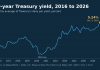
Watch whether the premarket decline holds after the 9:30 a.m. ET open, what executives say on the call about the consent orders and the fourth-quarter investment banking pipeline, and how the CPI print moves Treasury yields. Reuters noted that a prolonged bond market selloff has pushed yields around the world to multi-decade highs, a backdrop explained in our guide to why the 10-year Treasury yield matters.
Related live coverage
Follow bank earnings, yields and the CPI release on our Markets Live center. Earlier in the week, LiveNewsWorld covered JPMorgan’s $15.3 billion third-quarter profit and Goldman Sachs’ 29% earnings jump on equities trading.
Sources
- SEC Form 8-K, Exhibit 99.1: Bank of America third-quarter 2026 results (14 Oct 2026)
- U.S. Treasury: Enforcement actions against Bank of America (13 Oct 2026)
- OCC News Release 2026-89: $750 million civil money penalty (13 Oct 2026)
- CNBC: Bank of America third-quarter results and share reaction (14 Oct 2026)
- Bank of America Investor Relations: Quarterly Earnings